Uncategorized
Whole Melt Extracts 2g Disposable Real Or Fake
Aug
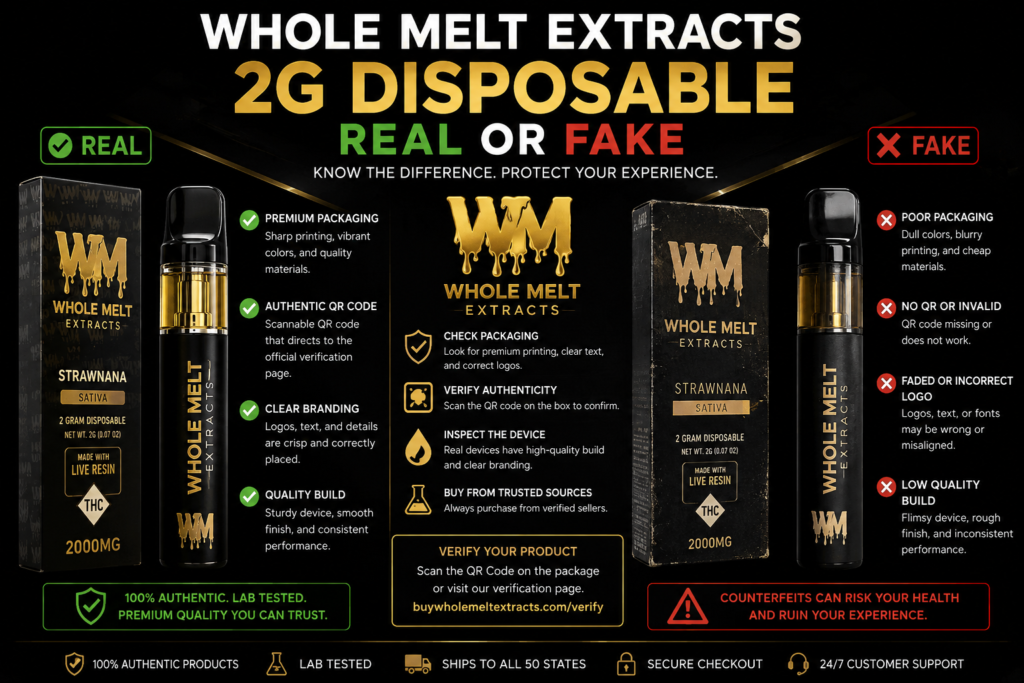
Whole Melt Extracts 2g Disposable Real or Fake? How to Check Yours
If you’re trying to determine whether a Whole Melt Extracts 2g Disposable is real or fake, don’t rely on a single feature such as the packaging, QR code, oil appearance, or device design.
Counterfeit products can imitate branding and packaging closely enough that a quick visual inspection may not provide a reliable answer. A better approach is to examine the complete product trail: where it came from, whether the packaging information is consistent, what its verification features show, whether available batch information corresponds with supporting documentation, and whether anything about the device raises additional questions.
This guide walks through that process step by step so you can make a more informed authenticity assessment before trusting a product.
How to Tell If a Whole Melt Extracts 2g Disposable Is Real or Fake
There isn’t one visual trick that reliably separates every authentic Whole Melt 2g disposable from every imitation.
Instead, use several independent checks.
Start with:
-
Where the disposable was purchased
-
Packaging and labeling consistency
-
QR or other verification features
-
Batch or identifying information
-
Available laboratory documentation
-
Tamper evidence
-
Physical condition of the device
-
Whether all product information agrees
The last point matters most.
A package, verification result, product identifier, and supporting document should not tell four different stories.
If you’re unfamiliar with the broader authentication process, our Whole Melt Extracts Verification Guide provides additional guidance across different Whole Melt product formats.
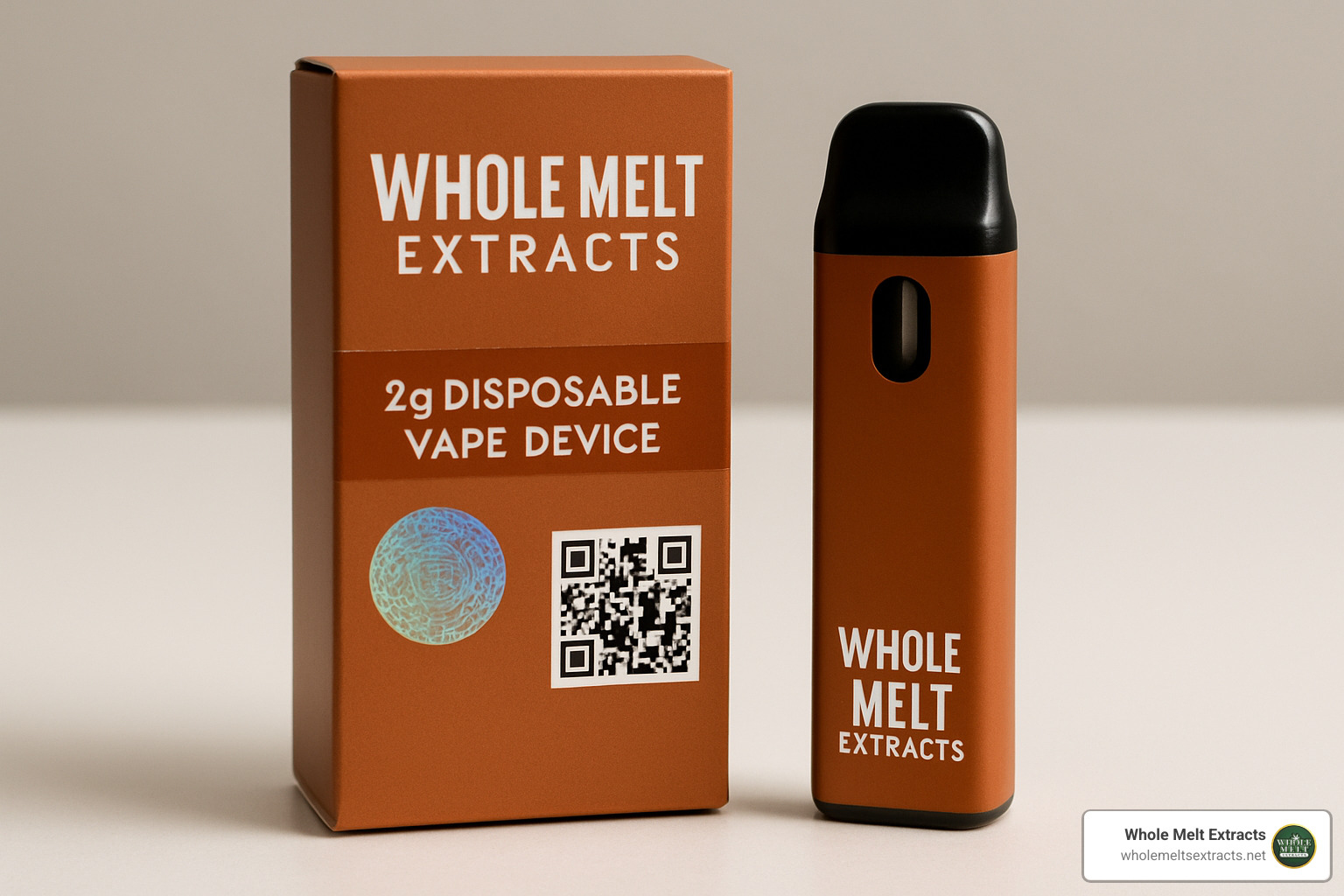
Start With Where the Whole Melt 2g Disposable Came From
Before examining tiny details on the box, consider the source.
A convincing package doesn’t tell you how the product entered the market.
Ask yourself whether you can clearly identify the seller and whether that seller provides meaningful information about the product being offered.
Be more cautious when dealing with sources that provide little traceability, especially when the seller cannot explain basic product information or offers no practical way to resolve authenticity questions.
Why Source Matters
Counterfeit-product discussions often concentrate almost entirely on packaging.
That’s understandable because packaging is easy to compare visually. But packaging can also be reproduced.
Seller credibility adds another layer to the assessment.
Ideally, you should be able to establish a reasonable chain:
Seller → product → identifying information → verification → supporting documentation
The stronger and more consistent that chain is, the more information you have to work with.
Examine the 2g Disposable Packaging Carefully
Now inspect the packaging as a whole.
Don’t look only for a logo or familiar artwork. Examine the quality and consistency of all the information presented.
Potential warning signs include:
-
Blurry or pixelated printing
-
Misspelled words
-
Unusual typography
-
Misaligned labels
-
Poor-quality graphics
-
Damaged or suspicious seals
-
Missing product information
-
Information that contradicts itself
-
Labels placed over important identifying information
One printing defect does not automatically prove that a product is counterfeit. Packaging can become damaged during storage or transportation.
What becomes more concerning is a pattern of inconsistencies.
For example, questionable printing combined with conflicting product information, an unexplained QR destination, and unverifiable seller information deserves considerably more scrutiny than a slightly damaged corner on an otherwise consistent package.
Can You Identify a Fake Whole Melt 2g Disposable by the Box?
Not conclusively.
Packaging can provide clues, but it shouldn’t serve as your final verdict.
This distinction is important because many online “real vs. fake” guides encourage consumers to look for one specific color, hologram, font, box texture, or label position.
Packaging and product releases can change. Counterfeiters can also reproduce visible characteristics.
Instead of asking:
“Does this box look real?”
Ask:
“Does everything on this box agree with the other information I can independently verify?”
That is a much stronger authentication question.
Check the QR Code—But Don’t Stop There
QR codes are frequently treated as instant proof of authenticity.
They shouldn’t be.
A QR code is ultimately a way of directing your phone to information. The existence of the code alone doesn’t establish whether the physical product attached to it is genuine.
When scanning a code, pay attention to the destination.
Check:
-
What website or page opens?
-
Does the destination make sense for product verification?
-
Does the page contain information relevant to the product you’re holding?
-
Do available identifiers correspond with the packaging?
-
Does anything appear inconsistent or suspicious?
Be especially careful with look-alike domain names, unexpected redirects, unrelated pages, broken verification pages, or downloads you weren’t expecting.
If the code doesn’t scan immediately, don’t automatically declare the product fake either. Printing damage, camera focus, lighting, or a technical problem could interfere with scanning.
Treat a failed QR check as a reason to continue investigating.
For additional assistance, customers can use our product verification page to review authenticity concerns.
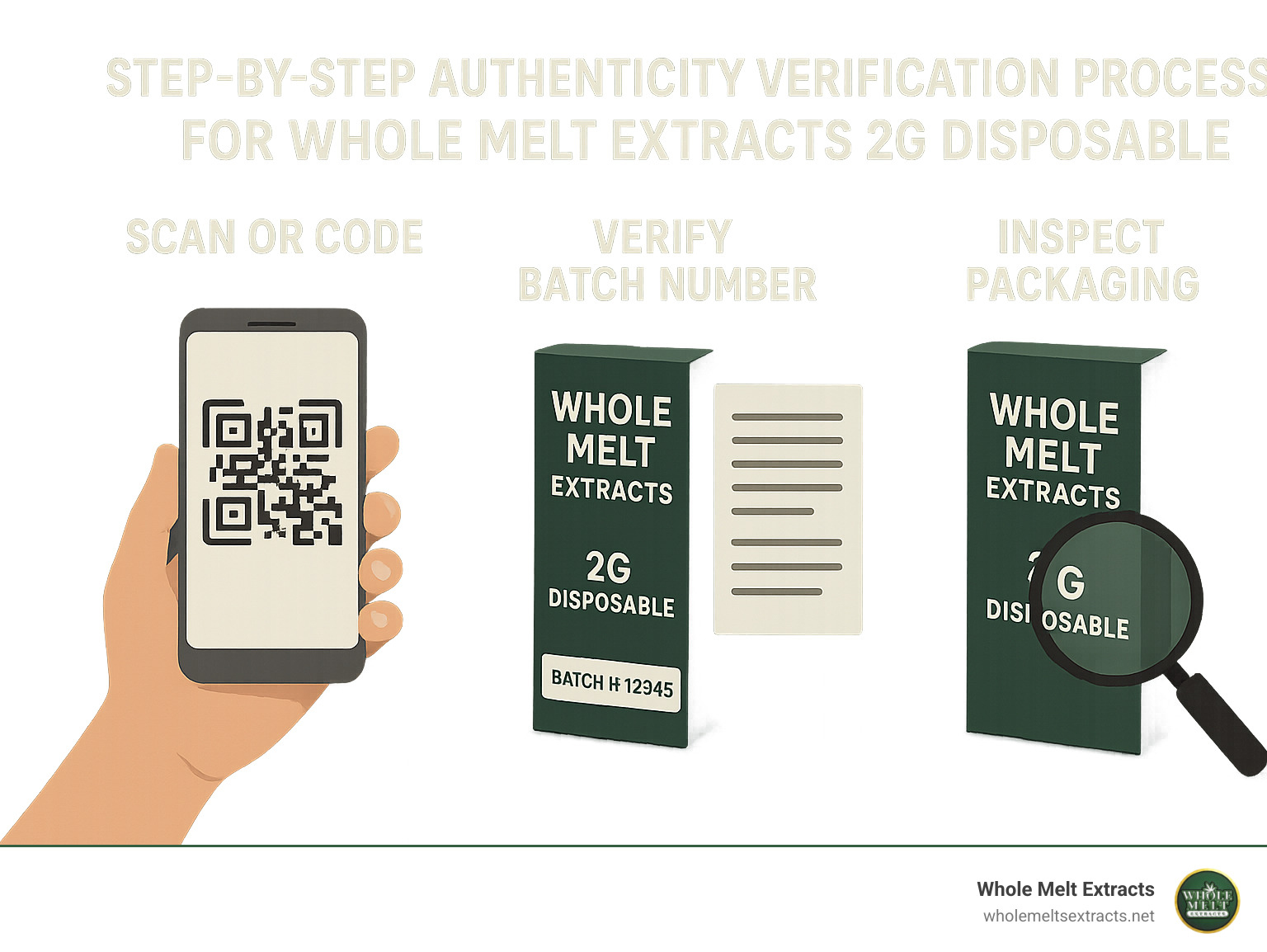
Match the Batch or Product Information
Where batch numbers or other identifying information are provided, compare them carefully.
This is where authentication becomes less about appearance and more about traceability.
Suppose your packaging identifies a particular product or edition, but the information produced through verification describes something different.
That discrepancy matters.
Likewise, if supporting laboratory documentation is presented for a product, determine whether its identifying information can reasonably be connected to the product you’re examining.
Think of this as cross-checking rather than simply checking boxes.
A Stronger Verification Sequence
Use this sequence:
Packaging details
↓
Product or batch identifier
↓
Verification information
↓
Supporting documentation
↓
Physical product
Ideally, each stage supports the others.
When one stage contradicts another, investigate the discrepancy before relying on the product.
Review the Lab Report or COA
A Certificate of Analysis, or COA, provides laboratory information about a tested sample.
Seeing the words “lab tested” or finding a laboratory PDF online isn’t enough by itself.
The important question is whether the documentation actually corresponds with the product or batch being presented to you.
When laboratory documentation is available, examine details such as:
-
Laboratory name
-
Sample identification
-
Batch or identifying information
-
Testing date
-
Product description
-
Cannabinoid information where reported
-
Relevant contaminant testing where reported
-
Whether the document corresponds with the product information
Don’t assume that a professional-looking COA automatically verifies the disposable.
A copied, unrelated, outdated, or mismatched laboratory report does not establish the identity of the product you’re holding.
Our store uses independent lab testing as part of its product-quality and verification approach, but lab documentation should still be read carefully rather than treated as a decorative trust badge.
Inspect the Whole Melt 2g Disposable Device
Once you’ve reviewed the product’s traceability, inspect the hardware.
Look at its overall condition and construction rather than searching for one supposedly definitive hardware characteristic.
Pay attention to:
-
Loose components
-
Cracks or damage
-
Poorly fitted sections
-
Significant leakage
-
Misaligned branding
-
Rough or unfinished components
-
Unusual gaps in the housing
-
Signs that the device or packaging has been tampered with
These observations can tell you whether something deserves further investigation.
However, hardware quality alone cannot authenticate a cannabis product.
Counterfeit hardware can look polished, while an authentic device could potentially be damaged during transportation or storage.
Physical inspection should therefore support—not replace—the other verification steps.
Don’t Judge Authenticity by Oil Color Alone
Oil appearance is another commonly misunderstood authenticity test.
You may encounter guides claiming that a particular shade proves a Whole Melt disposable is genuine or that another color automatically indicates a fake.
That is too simplistic.
Visual appearance alone cannot establish:
-
Product identity
-
Cannabinoid composition
-
Contaminant status
-
Laboratory results
-
Potency
-
Authenticity
The same caution applies to viscosity and bubble movement.
These observations may raise questions, but they should not replace product verification and appropriate documentation.
Don’t Use Flavor or Effects as an Authenticity Test
Trying the disposable is not an appropriate way to establish whether it is genuine.
Flavor, aroma, vapor production, perceived strength, or subjective effects cannot reliably prove authenticity.
More importantly, if the product’s origin or contents are genuinely questionable, consuming it to find out whether it “feels real” defeats the purpose of verification.
Verify first.
Whole Melt Extracts 2g Disposable Real vs. Fake: What to Compare
| Check | More Reassuring | Reason to Investigate |
|---|---|---|
| Purchase source | Identifiable seller with clear product information | Unknown or difficult-to-verify source |
| Packaging | Clear and internally consistent information | Errors, missing details or contradictions |
| QR/verification | Relevant destination with corresponding information | Suspicious, unrelated or inconsistent destination |
| Product identifiers | Details correspond across available records | Missing or conflicting information |
| Lab documentation | Can reasonably be connected to the product/batch | Generic, unrelated or mismatched report |
| Packaging integrity | No unexplained signs of tampering | Broken, altered or suspicious packaging |
| Hardware | Properly assembled and consistent | Major defects or unexplained inconsistencies |
| Overall traceability | Multiple independent details agree | Multiple verification points conflict |
No single row should be treated as absolute proof.
The value comes from looking at the combined evidence.
Common Red Flags Worth Investigating
Certain situations should make you more cautious.
An Unverifiable Seller
If you can’t establish who sold the product or get meaningful information about it, you have fewer ways to confirm its origin.
A QR Code That Leads Somewhere Suspicious
An unexpected website, unrelated page, strange redirect, or suspicious download should be investigated rather than ignored.
Conflicting Product Information
If the package says one thing while verification information or documentation says something different, find out why.
Unrelated Lab Documentation
A COA should have a meaningful connection to the product or batch being represented. A random cannabis laboratory report doesn’t authenticate a specific disposable.
Multiple Packaging Problems
One minor printing imperfection is different from a package containing spelling errors, poor graphics, contradictory labels, missing information, and questionable seals.
A Deal That Doesn’t Make Sense
Price should never be used as a standalone authenticity test.
However, unusually aggressive pricing combined with an unverifiable seller and other warning signs can justify additional scrutiny.
Why “Real vs. Fake” Photos Aren’t Always Enough
Side-by-side photographs can be useful educational references, but they have limitations.
A photo normally represents specific products from a specific point in time.
Packaging can change between collections, editions, or production runs. Counterfeit packaging can change too.
That means an old comparison image shouldn’t automatically become a permanent authenticity standard.
Use photographs to identify areas worth examining, not as the sole basis for your decision.
What Should You Do If Your Whole Melt 2g Disposable Doesn’t Verify?
If the information doesn’t add up, treat the product as unverified until you have enough reliable information to make a better assessment.
That wording matters.
An unsuccessful check does not always establish that a product is counterfeit. There may be missing information, damaged packaging, or another issue requiring clarification.
Keep:
-
The original packaging
-
Purchase information
-
Relevant product identifiers
-
Photos of the product
-
Screenshots of questionable verification results
Then contact the seller or appropriate verification support.
If you purchased through our website, our Whole Melt product verification service can help you review the available product information.
For authentication principles covering the wider product lineup, you can also read our complete Whole Melt Extracts Real or Fake Guide.
A Practical 2g Disposable Verification Checklist
Before relying on a Whole Melt Extracts 2g disposable, work through these questions:
-
Can I identify and evaluate the seller?
-
Is the packaging internally consistent?
-
Does the verification feature lead where expected?
-
Do available product or batch identifiers correspond?
-
Can laboratory documentation reasonably be connected to this product?
-
Does the physical device show unexplained inconsistencies or tampering?
-
Do all of these verification signals support one another?
If you can’t answer one question, investigate it.
If several independent checks produce contradictory information, that’s a stronger reason for concern.
Buying With Verification in Mind
Authenticity is easier to evaluate when verification starts before the purchase.
Instead of buying first and researching the seller afterward, consider the product information, verification support, store policies, and available documentation beforehand.
Our store provides 100% authentic products, independent lab testing, product-verification support, secure checkout, and 24/7 customer assistance.
You can also review our Shipping & Delivery information for details about shipping across all 50 U.S. states according to store policies and applicable restrictions.
If you’re comparing different profiles before selecting a product, browse our Whole Melt Extracts flavors guide for additional information.
Frequently Asked Questions
How can I tell if a Whole Melt Extracts 2g disposable is real?
Use multiple verification signals rather than one visual clue. Examine the seller, packaging, QR or verification information, available product identifiers, supporting lab documentation, packaging integrity, and device construction. Look for consistency across all of them.
Does scanning the QR code prove my Whole Melt 2g disposable is real?
A successful QR scan can be useful, but the existence of a QR code alone shouldn’t be treated as definitive proof. Check the destination and determine whether the information presented corresponds with the product and available identifiers.
What if my Whole Melt disposable QR code doesn’t scan?
Try again with good lighting and an undamaged section of the packaging. If it still doesn’t work, investigate through other available product identifiers and contact the seller or verification support. A failed scan deserves investigation but doesn’t independently prove the product is counterfeit.
Can fake Whole Melt 2g disposables have realistic packaging?
Counterfeit products can imitate branding and packaging, which is why visual inspection shouldn’t be your only authentication method. Product traceability and consistency between independent verification points are more useful.
Can oil color tell me if a Whole Melt Extracts disposable is fake?
Not reliably. Appearance alone cannot establish the product’s identity, composition, laboratory status, or authenticity. Avoid treating a particular oil color as guaranteed proof of either a real or fake product.
How do I check a Whole Melt lab report?
Review the laboratory identity, testing date, sample information, product or batch identifiers, reported results, and whether those details can reasonably be connected to the product you’re checking.
Should I use a Whole Melt disposable that I can’t verify?
If you genuinely cannot establish the product’s identity or source, don’t attempt to authenticate it through consumption. Retain the packaging and purchase information and seek additional verification first.
What’s the biggest mistake when checking a Whole Melt 2g disposable?
Relying on one feature. A QR code, professional-looking package, familiar logo, oil appearance, or well-built device can provide information, but none should independently determine your conclusion.
Whole Melt Extracts 2g Disposable Real or Fake: The Bottom Line
Determining whether a Whole Melt Extracts 2g Disposable is real or fake is less about finding one secret packaging detail and more about establishing a consistent product trail.
Start with the seller. Examine the packaging. Check where verification features lead. Compare available identifiers. Review relevant laboratory documentation. Inspect the physical device. Then consider whether those independent pieces of information support one another.
If they don’t, investigate the discrepancy rather than assuming everything is fine because the packaging looks convincing.
Need additional help? Use our Whole Melt Product Verification page to take the next step in checking your product.
