Uncategorized
Whole Melt Extracts Verification Guide
Aug
Whole Melt Extracts Verification Guide: How to Check Your Product
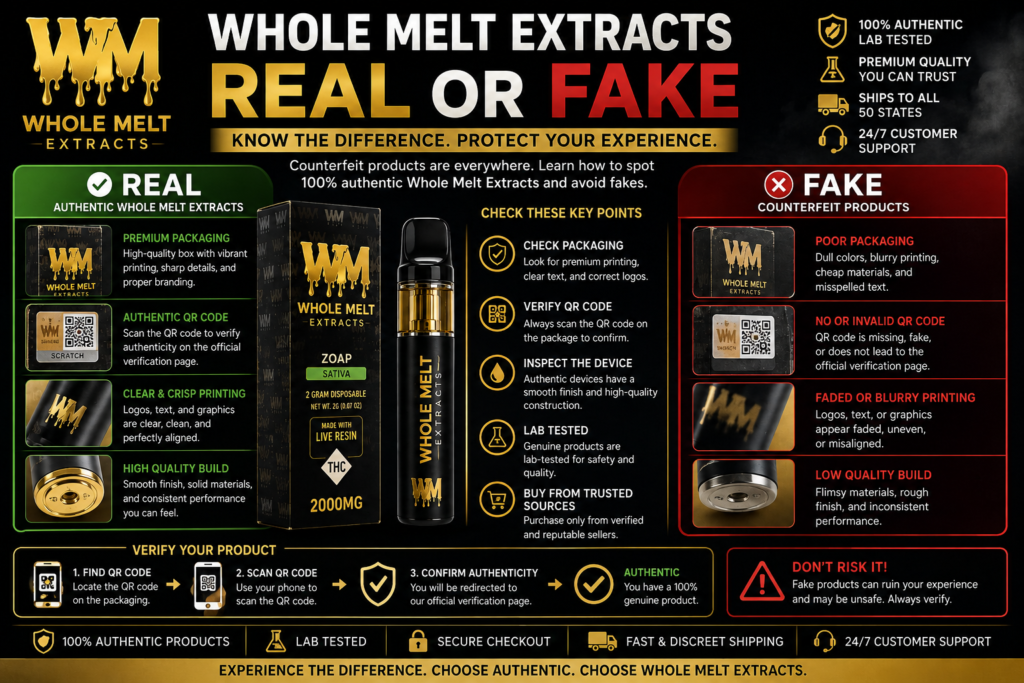
Whole Melt Extracts verification should involve more than scanning a QR code or comparing your packaging with a picture online.
A stronger verification process examines several pieces of information together: where the product came from, what is printed on its packaging, whether its identifying information is consistent, where its verification features lead, and whether available laboratory documentation corresponds with the product or batch.
This matters because packaging, branding, and even QR codes can potentially be copied. At the same time, packaging can vary between products, collections, and releases, making visual comparisons alone unreliable.
This guide gives you a practical process for checking a Whole Melt product without relying on guesswork.
What Does Whole Melt Extracts Verification Actually Mean?
Verification means establishing a reasonable connection between the physical product and information that supports its identity.
Think of it as a chain:
Seller → Product → Packaging → Identifier → Verification Information → Lab Documentation
Ideally, each part supports the next.
For example, if your package contains a batch identifier and a laboratory report is associated with that product, the information should correspond rather than describe an unrelated batch or product.
This is considerably more useful than deciding authenticity from one visual characteristic.
If your primary question is whether a questionable product might be counterfeit, read our Whole Melt Extracts Real or Fake Guide after completing the verification steps below.
Step 1: Identify the Exact Whole Melt Product
Before checking authenticity, determine exactly what you’re verifying.
Whole Melt products can appear across different formats, editions, collections, and flavor profiles. Depending on the product, packaging and physical presentation may differ.
Identify as much information as you reasonably can, including:
-
Product name
-
Product format
-
Edition or collection
-
Flavor or strain name where applicable
-
Capacity where stated
-
Batch or identifying code where provided
Why does this matter?
Because comparing unrelated products can create false red flags.
A dual-chamber disposable should not necessarily be expected to use the same packaging or physical design as a different disposable generation, cart, or concentrate product.
Verify like against like.
Step 2: Check Where the Product Came From
Product verification should include the purchase source.
Consider whether you can clearly identify the seller and whether meaningful product information and customer support are available.
Questions worth asking include:
-
Can the seller be identified?
-
Is there clear product information?
-
Are store policies available?
-
Is verification assistance offered?
-
Can the seller answer questions about the product?
-
Is there a record of your purchase?
An unknown seller doesn’t automatically establish that a product is counterfeit, just as a professional website doesn’t automatically establish authenticity.
The source is one verification signal that should be considered alongside the others.
Customers purchasing through our website have access to dedicated Whole Melt product verification support when additional assistance is needed.
Step 3: Inspect the Packaging Before Opening It
Keep the original packaging intact while performing your initial checks.
Examine the entire package rather than focusing on one logo or graphic.
Look for:
-
Clear printing
-
Consistent fonts
-
Correct spelling
-
Properly aligned graphics
-
Consistent product naming
-
Product-identifying information where provided
-
Intact seals or closures
-
Signs of relabeling
-
Contradictory information
-
Obvious evidence of tampering
You’re primarily looking for consistency.
For example, if the front identifies one product but another label describes a different flavor or edition, that discrepancy should be investigated.
Does a Packaging Error Mean the Product Is Fake?
Not necessarily.
Packaging can be damaged during handling, storage, or transportation. Minor production variations may also exist.
Treat packaging problems as reasons to investigate—not automatic proof of counterfeiting.
Does Perfect Packaging Prove Authenticity?
No.
Professional-looking packaging can potentially be reproduced.
Packaging should therefore support your verification process rather than determine its outcome.
Step 4: Locate the QR Code or Other Verification Information
If your product contains a QR code or other verification feature, locate it without assuming its presence proves authenticity.
Scan the code using your phone’s camera or an appropriate QR reader.
Then stop and examine the result.
The important question isn’t:
“Did the QR code scan?”
It’s:
“What information did the QR code actually give me?”
A QR code is essentially a pathway to a digital destination. A copied code can still open a webpage.
Verification requires evaluating the destination and the information presented there.
Step 5: Check Where the QR Code Leads
After scanning, inspect the destination carefully.
Ask:
-
Does the page appear relevant to the product?
-
Is the domain what you expected?
-
Does it provide actual verification information?
-
Does it identify a product or batch?
-
Does that information correspond with your packaging?
-
Is laboratory documentation provided where applicable?
Be cautious with unexpected redirects, unrelated webpages, suspicious domains, generic landing pages, or unexpected downloads.
Don’t assume a page is legitimate simply because it contains Whole Melt branding.
Look at the information behind the branding.
Step 6: Match the Product or Batch Information
This is one of the most important stages of the Whole Melt Extracts verification process.
Where identifying information is available, compare it across the product, packaging, verification result, and supporting documentation.
You want something like:
Package identifier
↓
Verification identifier
↓
Product information
↓
Applicable laboratory documentation
The information should form a logical connection.
If your package references one batch but the document presented to you identifies something entirely different, don’t overlook the discrepancy.
Investigate it.
Why Batch Matching Matters
Laboratory reports relate to tested samples.
Therefore, simply finding a cannabis laboratory report online isn’t the same as establishing that the report is relevant to the product you’re checking.
Matching identifying information helps establish that connection.
Step 7: Review the Certificate of Analysis
A Certificate of Analysis, usually shortened to COA, reports laboratory findings for a tested sample.
When documentation is available, actually read it rather than treating the existence of a PDF as verification.
Depending on the testing performed, a COA may contain information such as:
-
Laboratory identity
-
Sample identification
-
Batch or lot information
-
Testing date
-
Cannabinoid results
-
Terpene information where tested
-
Pesticide screening
-
Heavy-metal screening
-
Residual-solvent results where applicable
-
Microbial or other contaminant testing where performed
Not every report will contain identical panels, and testing requirements can differ.
The central verification question remains:
Can this report reasonably be connected to the product or batch you’re checking?
Our products are independently lab tested, and documentation should be evaluated alongside product-identifying information rather than treated as a standalone marketing badge.
Step 8: Look for Signs of Tampering
Now inspect whether the package appears to have been altered.
Potential warning signs include:
-
Broken seals
-
Unexplained adhesive
-
Labels placed over other labels
-
Damaged closures
-
Signs of resealing
-
Product information that appears replaced
-
Packaging that appears previously opened
Tampering and counterfeiting aren’t necessarily the same thing.
However, unexplained alteration can undermine your ability to establish what is actually inside the package.
Step 9: Inspect the Physical Product
Once you’ve completed the packaging and documentation checks, examine the product itself.
What you inspect depends on the format.
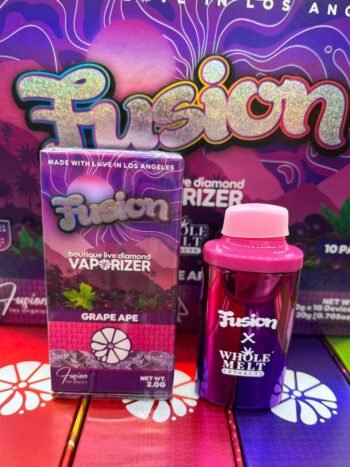
For disposable and vape hardware, look for major issues such as:
-
Cracked housing
-
Loose components
-
Significant leakage
-
Poorly fitted parts
-
Misaligned branding
-
Unusual gaps
-
Obvious manufacturing defects
-
Signs of prior use or alteration
For packaged concentrates, consider whether the physical product and container correspond with the product format represented on the packaging.
Physical quality can provide useful supporting evidence.
It should not, however, override conflicting documentation or failed verification.
What Makes a Whole Melt Verification Signal Strong?
Not all evidence deserves equal weight.
| Verification Signal | Relative Usefulness | Why |
|---|---|---|
| Traceable purchase source | Strong | Helps establish product origin |
| Matching product/batch identifiers | Strong | Connects physical product with records |
| Relevant verification information | Strong | Provides product-specific evidence |
| Matching COA | Strong when traceable | Connects laboratory data with a tested sample/batch |
| Packaging consistency | Supporting | Useful for identifying discrepancies |
| Tamper evidence | Supporting | Helps assess package integrity |
| Hardware/build quality | Supporting | Can reveal physical inconsistencies |
| Product price | Weak alone | Legitimate prices can vary |
| Oil/concentrate color | Weak alone | Appearance doesn’t establish identity |
| Flavor or smell | Weak alone | Subjective and product-dependent |
| Online comparison photo | Weak alone | May represent another release or format |
The best verification decision comes from multiple independent signals agreeing.
Whole Melt Verification Methods You Shouldn’t Rely On Alone
Some authenticity shortcuts are repeated online because they’re easy.
Easy doesn’t necessarily mean reliable.
Oil Color
Color cannot independently establish product identity, composition, laboratory status, or authenticity.
Bubble Tests
Oil movement or bubbles shouldn’t replace traceability or laboratory documentation.
Smell
Aroma varies and cannot establish whether packaging or contents came from a particular source.
Taste
Do not consume a questionable product as an authenticity experiment.
Perceived Potency
Subjective effects aren’t a verification method.
Price
Pricing can provide context, but discounts, quantities, inventory, and sellers can affect prices.
Packaging Photos
Useful for comparison, but potentially outdated or specific to another collection.
What If the QR Code Doesn’t Work?
A QR code that doesn’t scan deserves further investigation, but don’t immediately jump to a conclusion.
First:
-
Make sure the code isn’t physically damaged.
-
Improve lighting and camera focus.
-
Try scanning again.
-
Check whether another identifier is available.
-
Retain the packaging.
-
Contact verification support if necessary.
A failed QR code is one piece of evidence.
Combine it with the rest of the product information before reaching a conclusion.
What If the QR Code Works but the Information Doesn’t Match?
This is more significant than simply seeing a webpage load.
Suppose your package identifies Product A, but the verification information clearly describes Product B.
That inconsistency needs to be explained.
Similarly, if a batch identifier doesn’t correspond with the documentation presented, don’t assume the product has been successfully verified merely because the QR code functioned.
Successful scanning and successful verification are different things.
Whole Melt Extracts Verification Checklist
Use this checklist whenever you’re checking a product:
Product Identification
-
I know which Whole Melt product I’m checking.
-
I have identified the format, collection or edition where available.
-
Product information is consistent across the package.
Packaging
-
Printing and labeling are clear.
-
There are no unexplained contradictions.
-
I see no obvious signs of relabeling.
-
Packaging integrity appears intact.
Digital Verification
-
I located the available verification feature.
-
The QR code or verification method leads somewhere relevant.
-
The destination does not appear suspicious or unrelated.
-
Available product information corresponds with my package.
Identifiers & Documentation
-
Available product or batch identifiers correspond.
-
Any COA provided is relevant to the product or batch.
-
Laboratory information can be identified.
-
I reviewed the report instead of merely confirming that one exists.
Final Cross-Check
-
The physical product is consistent with its packaging.
-
There are no unexplained signs of tampering.
-
Multiple independent verification signals agree.
If several items cannot be confirmed, investigate further rather than relying on one successful check.
Verification for Whole Melt 2g Disposables
If you’re checking a 2g disposable, the same verification framework applies, but hardware and product-specific information become more relevant.
Check the exact disposable edition, packaging, identifiers, verification information, available documentation, and physical device together.
Our dedicated Whole Melt Extracts 2g Disposable Real or Fake guide goes deeper into the warning signs and verification questions specific to that product format.
Verification for Whole Melt Dual Chamber Products
Dual-chamber products deserve product-specific comparison because their hardware configuration differs from conventional single-chamber disposables.
Don’t authenticate a dual-chamber product simply by comparing it with photographs of another Whole Melt format.
Instead, verify the exact edition and check its packaging, product information, identifiers, available documentation, and device configuration together.
For a deeper walkthrough, see our Whole Melt Dual Chamber Real or Fake guide.
Verification vs. Real-or-Fake Checking: What’s the Difference?
These topics overlap, but they serve slightly different purposes.
A verification guide explains the process you should use to establish product identity and traceability.
A real-or-fake guide focuses more heavily on suspicious products, counterfeit warning signs, and what discrepancies might mean.
That’s why verification should ideally come first.
If the product passes your verification checks, you have more information on which to base your assessment.
If several checks fail or contradict each other, our Whole Melt Extracts Real or Fake Guide explains how to evaluate those warning signs further.
What to Do When a Whole Melt Product Cannot Be Verified
Don’t force a yes-or-no conclusion when the evidence isn’t sufficient.
Instead, treat the product as unverified until the discrepancy can be resolved.
Keep:
-
Original packaging
-
Product identifiers
-
Order information
-
Photos of the product
-
Photos of labels and codes
-
Screenshots of verification results
-
Available laboratory documentation
This information makes it much easier to explain the issue when contacting the seller or verification support.
Customers who need assistance can use our Verify Authentic Product page.
Why Verification Should Start Before You Buy
The best time to think about authenticity isn’t after a questionable package arrives.
Before purchasing, consider whether the seller provides clear product information, accessible policies, verification assistance, and meaningful support.
Our store provides 100% authentic products, independent lab testing, product-verification support, secure checkout, and 24/7 customer assistance.
For order-related information, review our Shipping & Delivery page, including details regarding shipping across all 50 U.S. states according to store policies and applicable restrictions.
If you’re comparing products before choosing one, our Whole Melt Extracts Flavors guide can also help you explore available flavor profiles.
Frequently Asked Questions
How do I verify Whole Melt Extracts?
Start by identifying the exact product and seller. Inspect the packaging, use available QR or verification features, compare product or batch identifiers, review relevant laboratory documentation, and check that the physical product corresponds with the information you’ve verified.
How do I scan a Whole Melt verification code?
Use your phone’s camera or QR reader to scan the code when one is provided. After scanning, examine the destination carefully. A successful scan isn’t enough by itself; check whether the resulting information actually corresponds with your product.
Does a Whole Melt QR code prove the product is authentic?
A QR code can contribute to verification, but its presence alone shouldn’t determine authenticity. Codes and printed packaging can potentially be copied. The destination, product information, identifiers, and applicable supporting documentation matter.
What should I do if my Whole Melt verification code doesn’t work?
Check whether the code is damaged, try scanning it again under better lighting, look for other available identifiers, retain the original packaging, and contact verification support when necessary. Don’t rely on the failed scan alone to reach a final conclusion.
How do I verify a Whole Melt batch number?
Compare the identifier printed on the product or packaging with available verification information and applicable laboratory documentation. Where batch-level records are provided, the information should correspond.
How do I know whether a Whole Melt COA belongs to my product?
Look for identifying information that connects the report with the product or batch you’re checking. Review the laboratory identity, sample information, batch or lot number where provided, testing date, and reported results rather than relying solely on the existence of a COA.
Can packaging alone verify Whole Melt Extracts?
No. Packaging is useful supporting evidence but can potentially be reproduced. Combine packaging inspection with seller information, identifiers, digital verification, laboratory documentation, and the physical product.
What should I do if my Whole Melt product cannot be verified?
Keep the original product, packaging, purchase details, identifiers, photographs, and verification results. Treat it as unverified while seeking clarification rather than attempting to establish authenticity by consuming it.
Verify the Information, Not Just the Packaging
Reliable Whole Melt Extracts verification isn’t about finding one secret feature.
It’s about establishing consistency.
Source → product → packaging → identifier → verification → documentation.
When those independent pieces of information support one another, you have a much stronger foundation for evaluating the product. When they conflict, investigate before trusting appearances.
Ready to check a product? Visit our Whole Melt Product Verification page to begin the verification process.

Hi, this is a comment.
To get started with moderating, editing, and deleting comments, please visit the Comments screen in the dashboard.
Commenter avatars come from Gravatar.